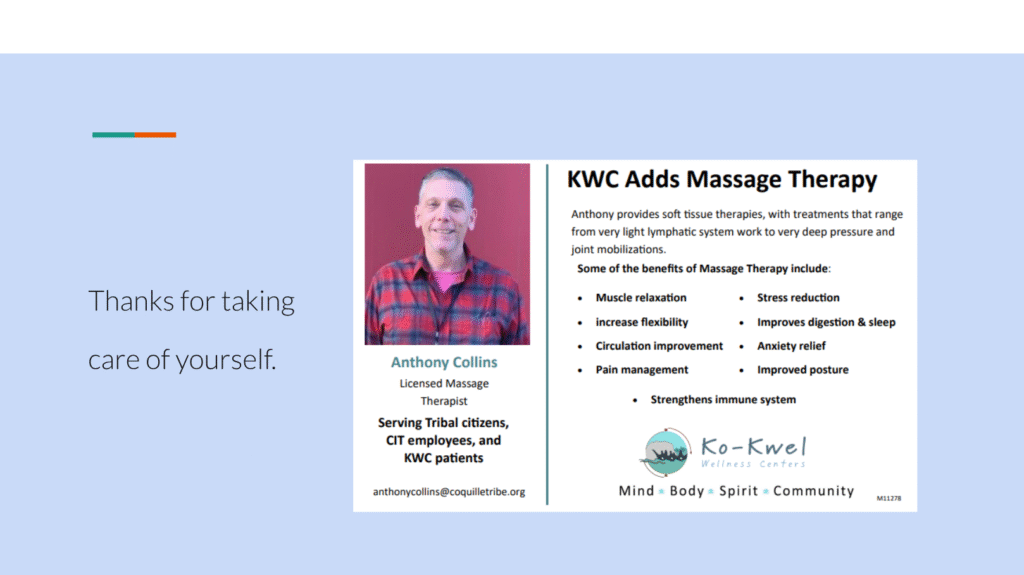
Whether you’re seeking relief from stress, muscle tension, or simply looking to enhance your overall well-being, Shishda Haws staff is here to provide you with exceptional care. Other benefits of massage therapy include Increased flexibility, improvements to digestion and sleep, better circulation improvement, anxiety relief, pain management, improved posture, and strengthened immune system.

Preferring to go by his middle name, Anthony Collins, Licensed Massage Therapist, brings a rich background in education, coaching, and wellness to his therapeutic practice at KWC-Coos Bay. With a Master’s in Adult Education and massage training from IBS Massage School, Anthony has worked extensively with tribal communities, student-athletes, and adult learners. His specialties include deep tissue massage, mobility work, Muscle Energy Techniques, IASTM, cupping, and Thai-style massage—all aimed at helping patients move more freely and feel better. His trauma-informed approach blends science, compassion, and collaboration to support each patient’s unique wellness journey.
Anthony works in the Shishda Haws Rehabilitation and Fitness Center. Current KWC patients are welcome to schedule a session. Provider referral is not required for massage therapy.
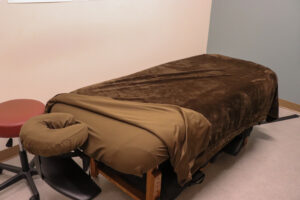
Don’t miss out on the opportunity to experience the healing benefits of massage therapy. Schedule your appointment with Anthony Collins at SHRFC and take the first step towards a healthier, more relaxed you.
Information on how to use your massage benefits or fee for service can be found below. For more information or to book your session, please contact Receptionist Kelsey Holling at (541) 888-9494, ext. 1039.
We are proud to offer massage therapy services to the following groups, with priority given to Coquille Tribal Citizens and their spouses:
Our massage therapy sessions are competitively priced to ensure accessibility for all:
Many people think of luxurious spa days or sweaty and smelly Athletic Training rooms as typical massage locations. Anthony Collins, the new Licensed Massage Therapist (LMT), recalled recently that, “I was a longtime runner who became a Cross Country and Track & Field Coach. For a long time massage for me was a special event or repair after a big event like a marathon. When osteoarthritis came calling though, once in a while sessions turned into weekly ones.” Soft tissue therapy is growing most rapidly when aligned with comprehensive medical and behavioral health care plans. Most Americans report wanting to improve health and wellness. And increasingly, people are adding LMT sessions to boost both their physical and emotional health.
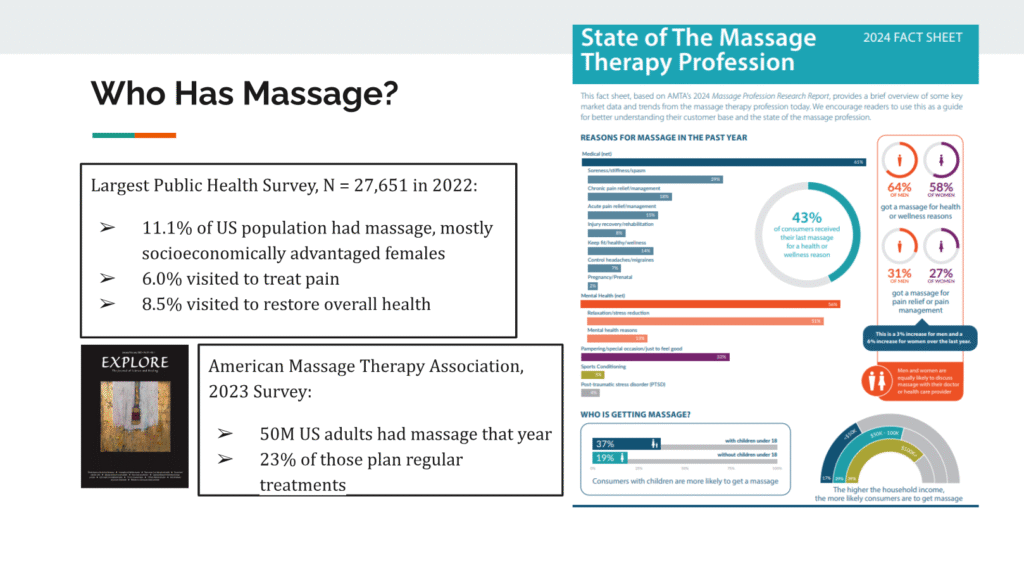
The American Massage Therapy Association (a non-profit professional organization) recently published their latest research noting about 50 million US adults had at least one massage in 2023. Of those, 61% named a medical health concern for seeking treatment. 56% called mental health a reason to meet with an LMT while only 32% and 5% of US adults sought out massages for pampering/special occasions or sports conditioning respectively.
Household income drives the likelihood of getting massages. More affluent people have more sessions. Women have more treatments than men in the US, and interestingly about twice as many of all massage clients have children under 18. Both women than men are getting more massages for general health or wellness.
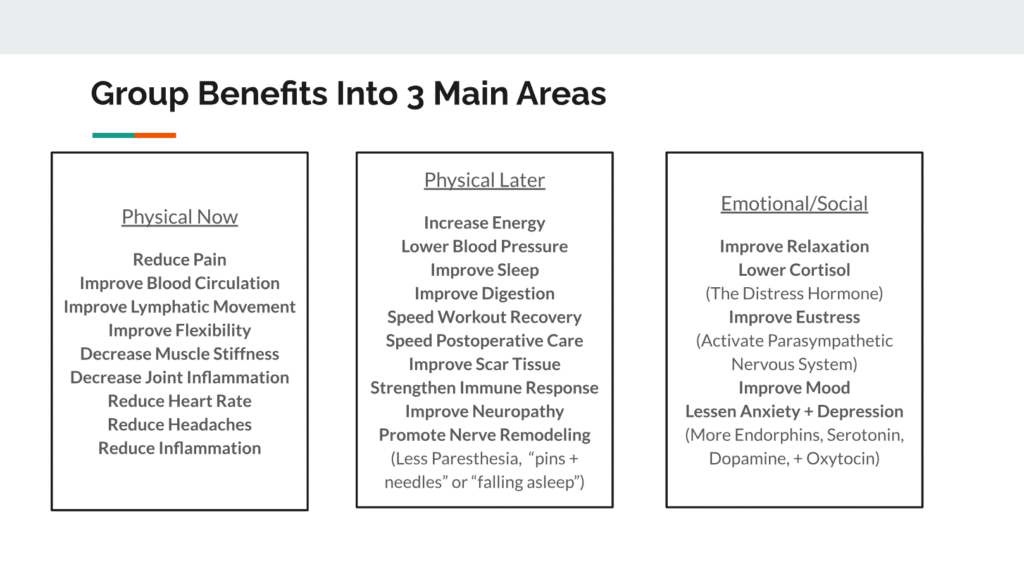
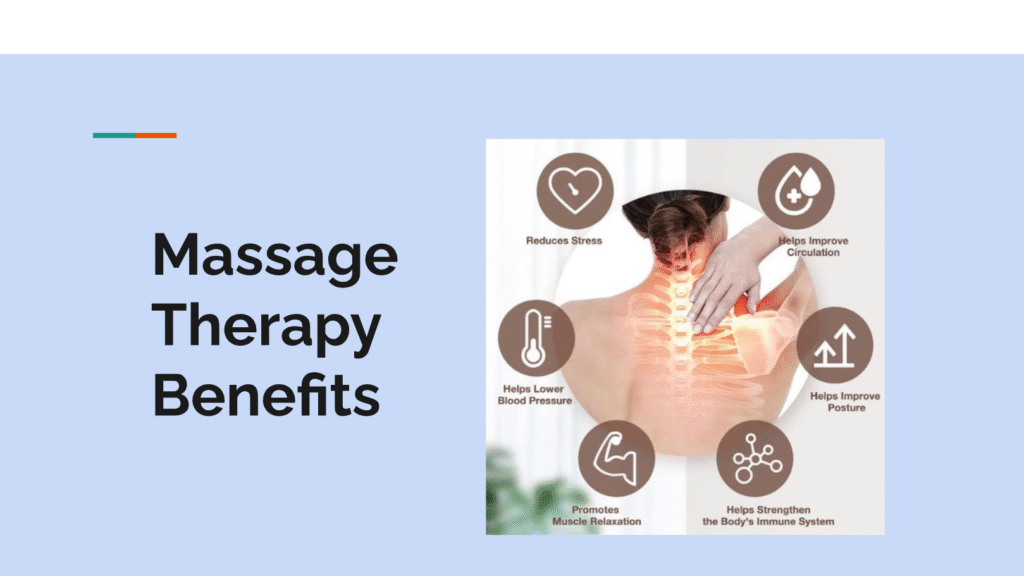
Reducing and managing pain leads all reasons for people getting massages. Massage therapy provides significant, immediate pain reduction for chronic issues like arthritis, aches from sitting at a desk all day, or acute injury. Modalities like deep tissue and myofascial release work on muscle adhesions, the “knots” creating tension often where they overlap. Massages improve blood flow making for better oxygen and nutrient delivery which can help with recovery or soreness. Better circulation also means improved metabolic waste removal. Our livers and kidneys remove “toxins,” no scientific evidence supports any toxin being removed by massage, but reducing pain and increasing lymphatic fluid movement creates benefits. Regular massages improve headaches and inflammation. Working with an LMT can address muscle stiffness and joint mobility. Athletes, sedentary workers, and elders all needing to stay limber can improve mobility and reduce injury risk.
Massages relieve distress, the kind of stress making people sick, and improve eustress, where the body rests and digests better. Massage helps improve mood and promotes relaxation. Caring touch and a calming environment can lower cortisol, the distress hormone. Especially in the hours following massage, the parasympathetic nervous system increases the “feel good” body chemicals of endorphins, serotonin, dopamine, and oxytocin. Research shows that massages can help reduce symptoms of anxiety and depression. Massages help those struggling with insomnia or restless nights. LMT sessions often help behavioral health.
Massage therapy improves health. As more people prioritize holistic care, regular massage keeps growing as part of a healthy lifestyle. LMT’s cannot diagnose illness and so work with providers to create plans of care. Hospitals and other in-patient locations are increasing massage. And by helping manage pain without medication, LMT’s are going teams of providers to address the tragic opioid epidemic in the US. Having a rub-down after a big workout or a lavish, pampered day of self-care are still good reasons for treatment. More than ever though, people are finding better health and well-being from regular massage therapy.